SUPER POSTMODERN
2010 — 2011
Princeton University Master of Architecture Thesis
Advisor: Jesse Reiser
Instructor: Elizabeth Diller
Assistance: John Murphey, Toshiki Hirano, Dana McKinney, Nasra Nimaga, Nushelle de Silva, Jean Choi, Razvan Ghilic-Micu, Sanjay Sukie, Patrick Tierney, Silan Yip
Humanist architectural theory utilized tonal ratios and proportional systems based on Plato's account of universal harmony in the Timaeus, and Pythagoras' demonstration of music's mathematical order. Rudolf Wittkower explained that this basis raised architecture from métier to transcendental art.
In light of the Postmodern erasure of stable meanings and contemporary research in Novel Tectonics, noise's capacity to become music using simple and sharp geometry alongside complex and smooth formal systems is examined. Going beyond proportions and ratios is necessary since Humanist concepts eroded from Baroque onward, starting with polyphonic fugal and canonic innovations. These insights guide the effort to alternate between the blur of noise and the focus of music using a tectonic arrangement of geometry.
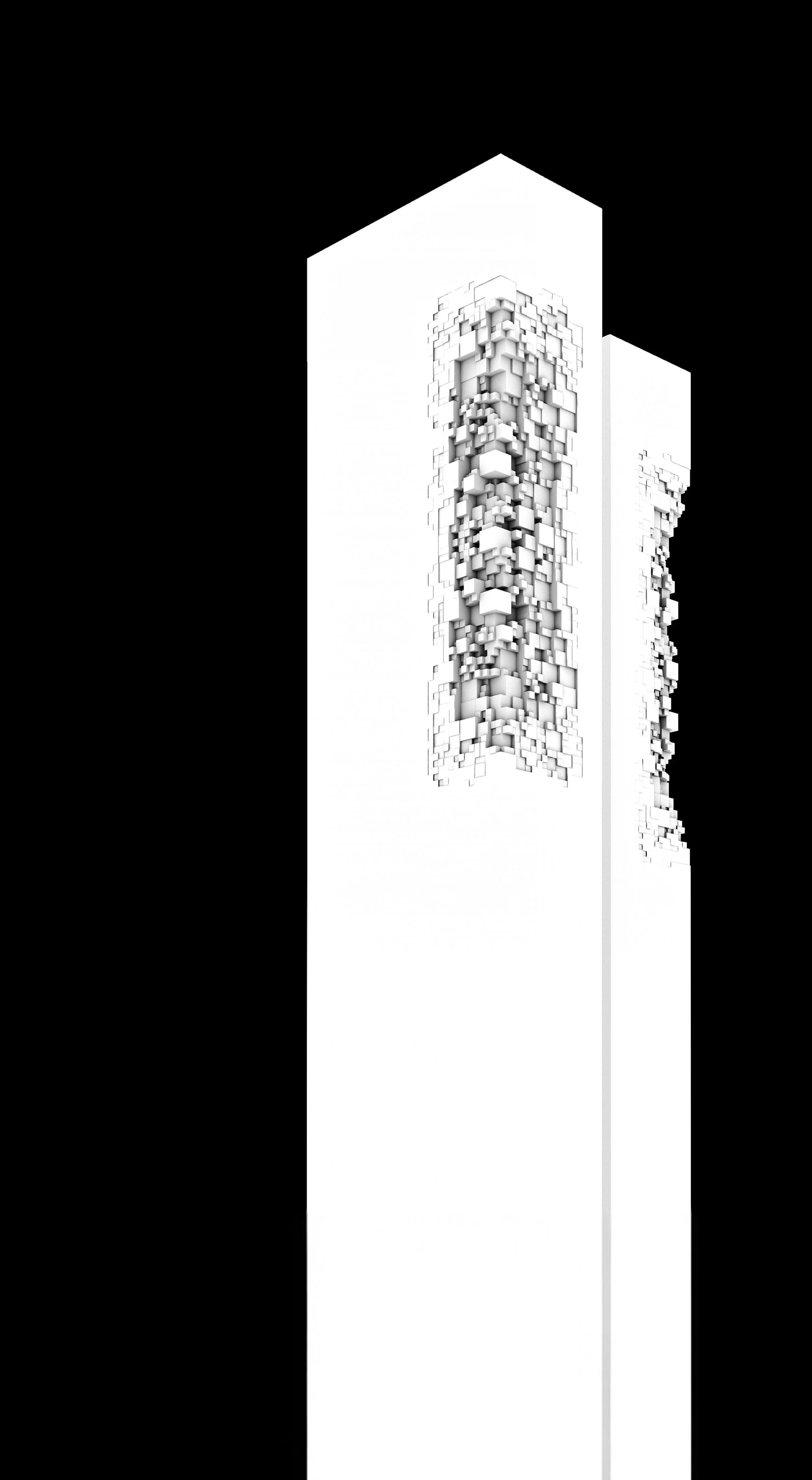
Examining the oscillations inherent in the binary opposition of noise/music, the notational details are based on variations of the cubic form. A simple expression of complex thought.
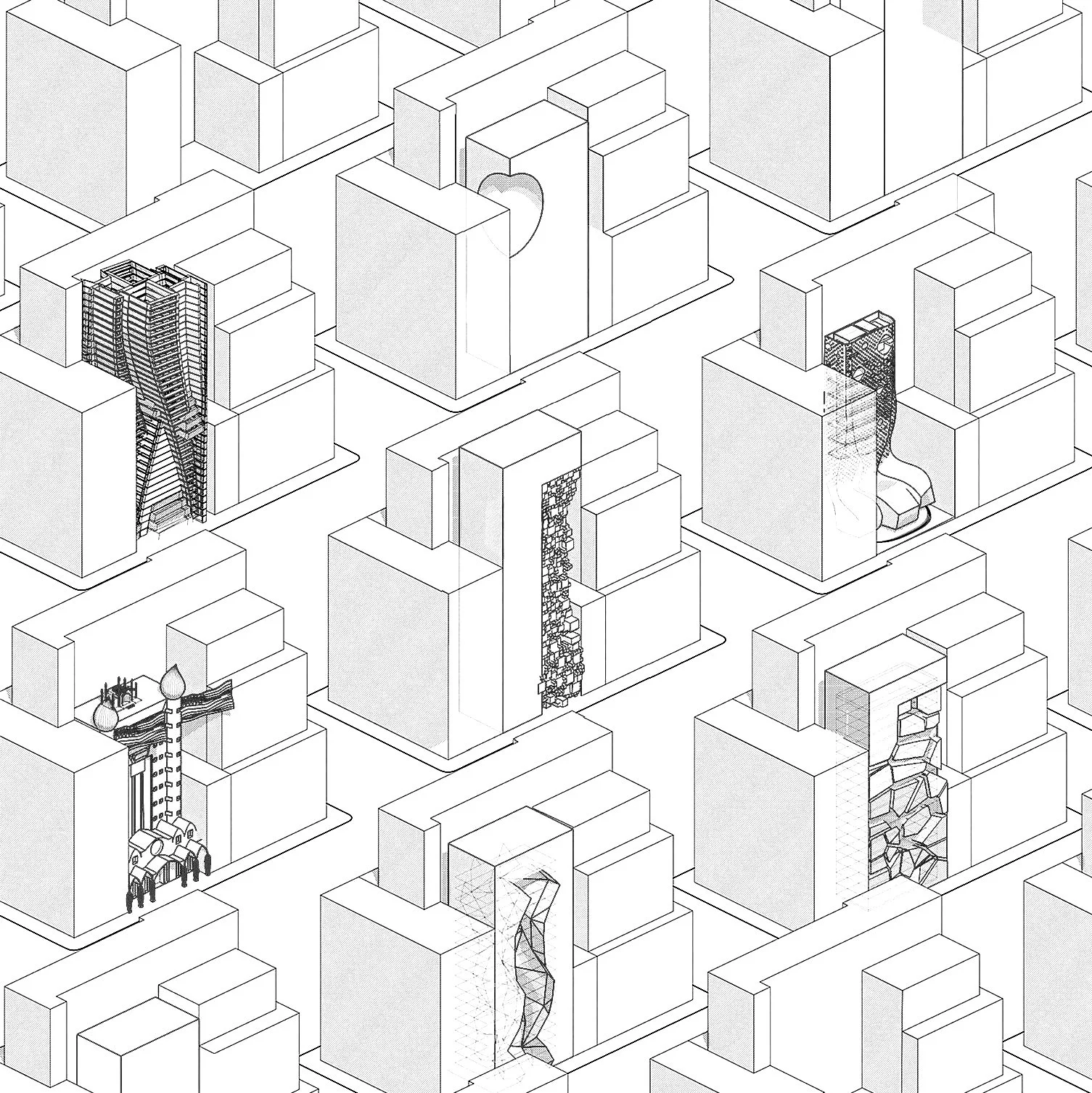
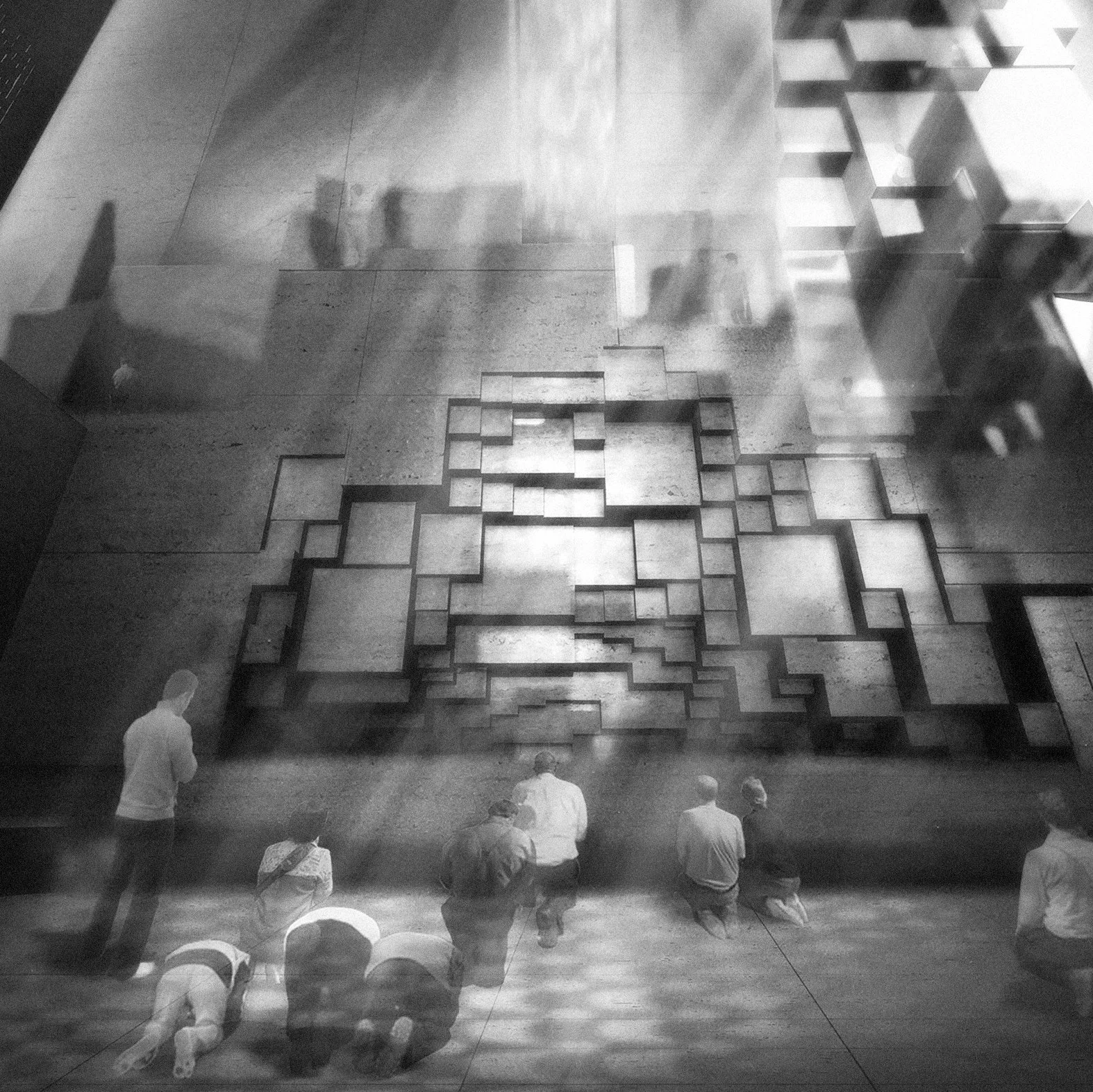
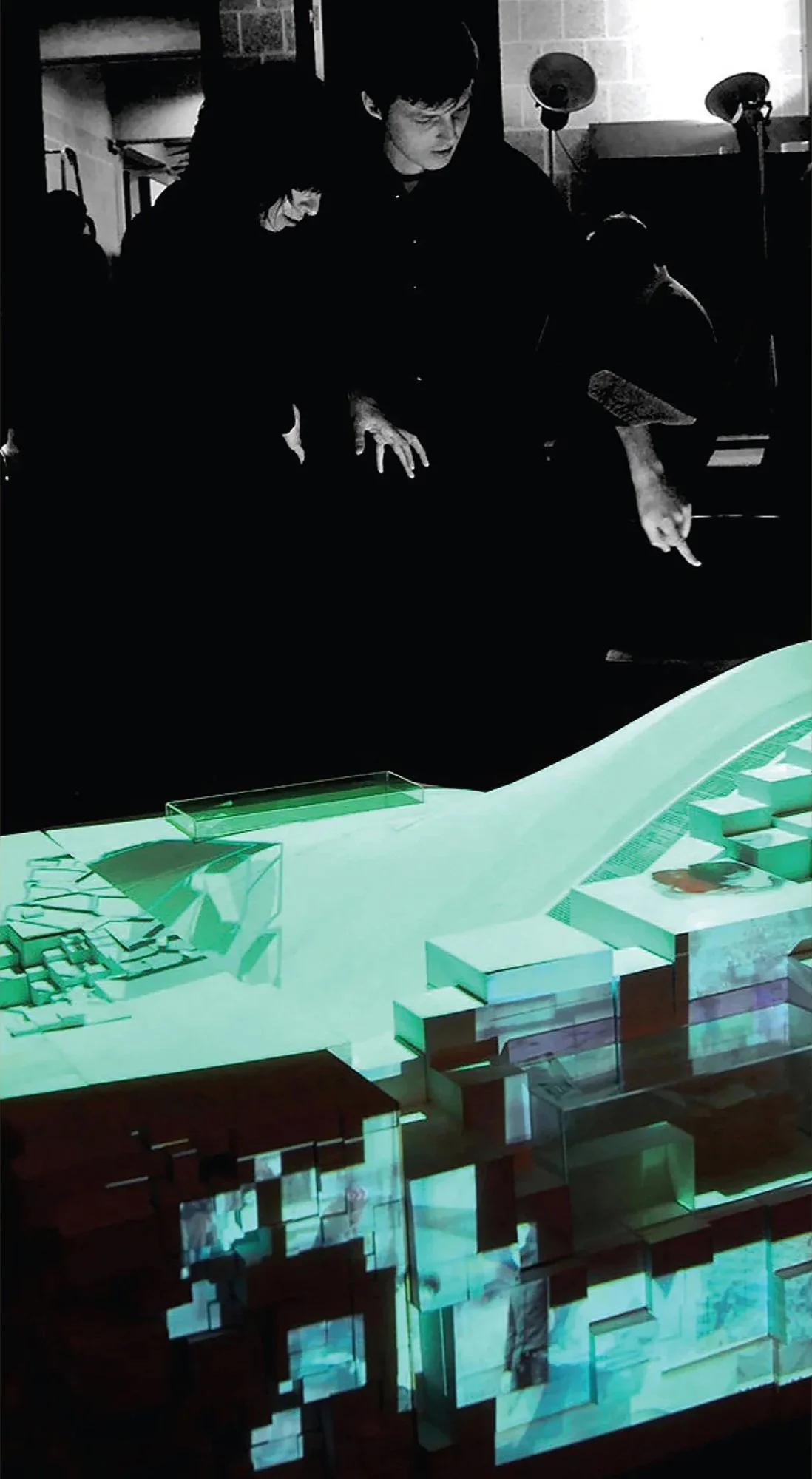
This theory is demonstrated with a new World Trade Center Memorial. The cubic variations symbolize multiple meanings, congruent and contradictory, using formal abstraction.
[Revised from the original submission]